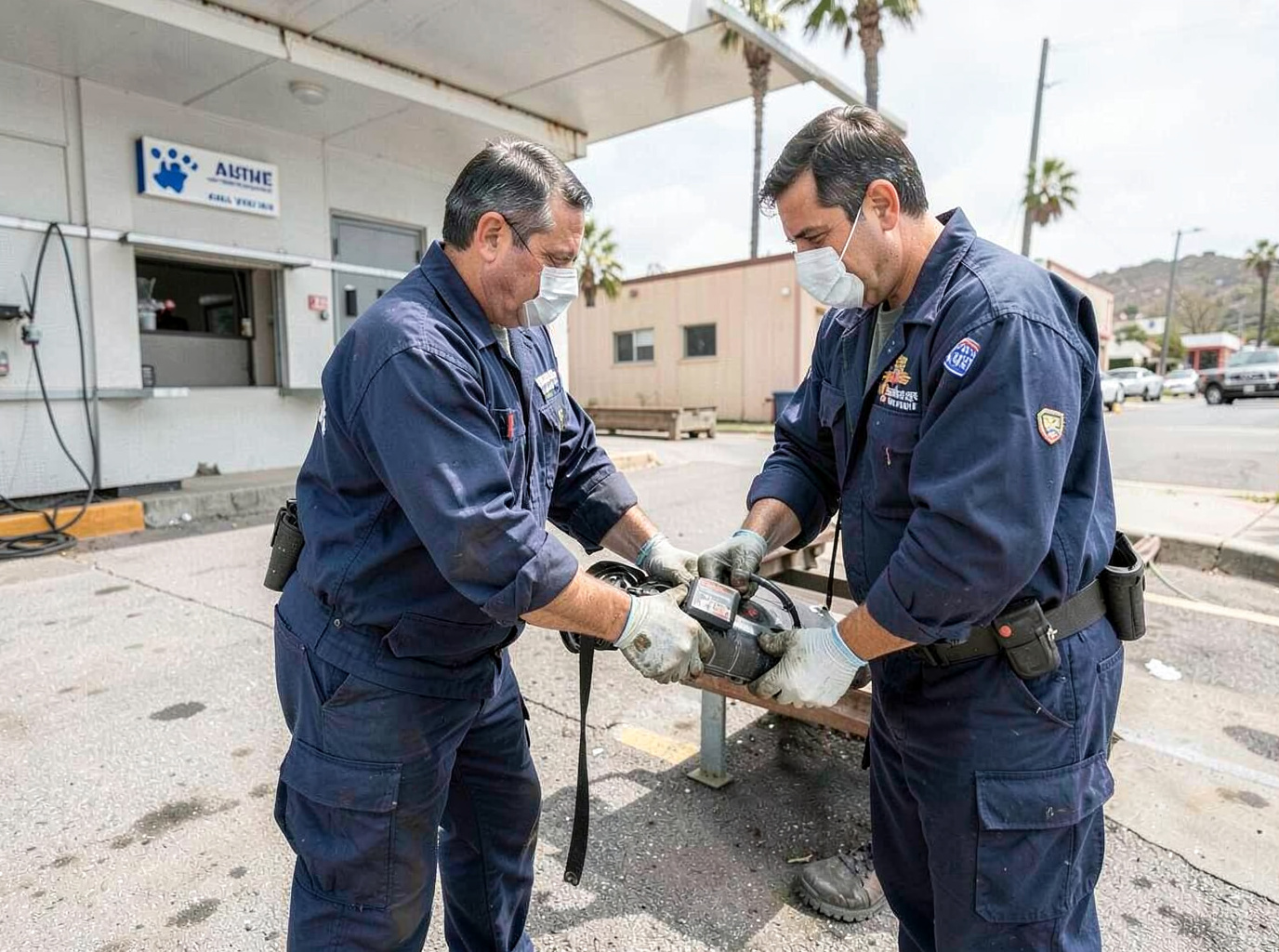
Homes in 39. Costa Mesa sit on older lots with slab foundations and aging pipes common to mid-century builds in this part of Chula Vista. Winter rains under the mild coastal Mediterranean climate can send water under slabs or into crawl spaces, especially near streets that drain slowly toward the bay. Our crew leaves 70 E J St and reaches these blocks quickly to stop intrusion before it spreads to drywall and flooring.
Eastlake and Otay Ranch developments sit just outside 39. Costa Mesa, yet the neighborhood itself keeps narrower driveways and tighter side setbacks that limit equipment placement. We stage dehumidifiers and air movers on the street when lots are small and use moisture meters to trace water that travels along shared property lines. San Diego County records show many of these homes lack modern French drains, so extraction work often starts at the lowest points along the rear fence.
National City and Imperial Beach borders are minutes away, but traffic on E Street and Third Avenue can slow response if crews are not already staged locally. We keep extraction vans loaded for the specific soil conditions here—clay-heavy pockets that hold moisture longer than sandy coastal soil farther west.
Around 39. Costa Mesa
We regularly work near:
- 📍E J Street
- 📍Third Avenue
- 📍J Street Linear Park
- 📍Chula Vista Library
Water Damage Restoration in 39. Costa Mesa — Local Notes
- •Narrow driveways and small rear yards in 39. Costa Mesa often require street-side staging of equipment instead of backyard access.
- •Mid-century slab homes here commonly see water travel under the foundation toward interior walls during heavy winter rains.
- •Clay soil pockets retain moisture longer, extending drying times compared with sandier lots closer to the bay.
- •Shared fences and tight setbacks mean moisture mapping must cover neighboring properties to prevent hidden cross-contamination.