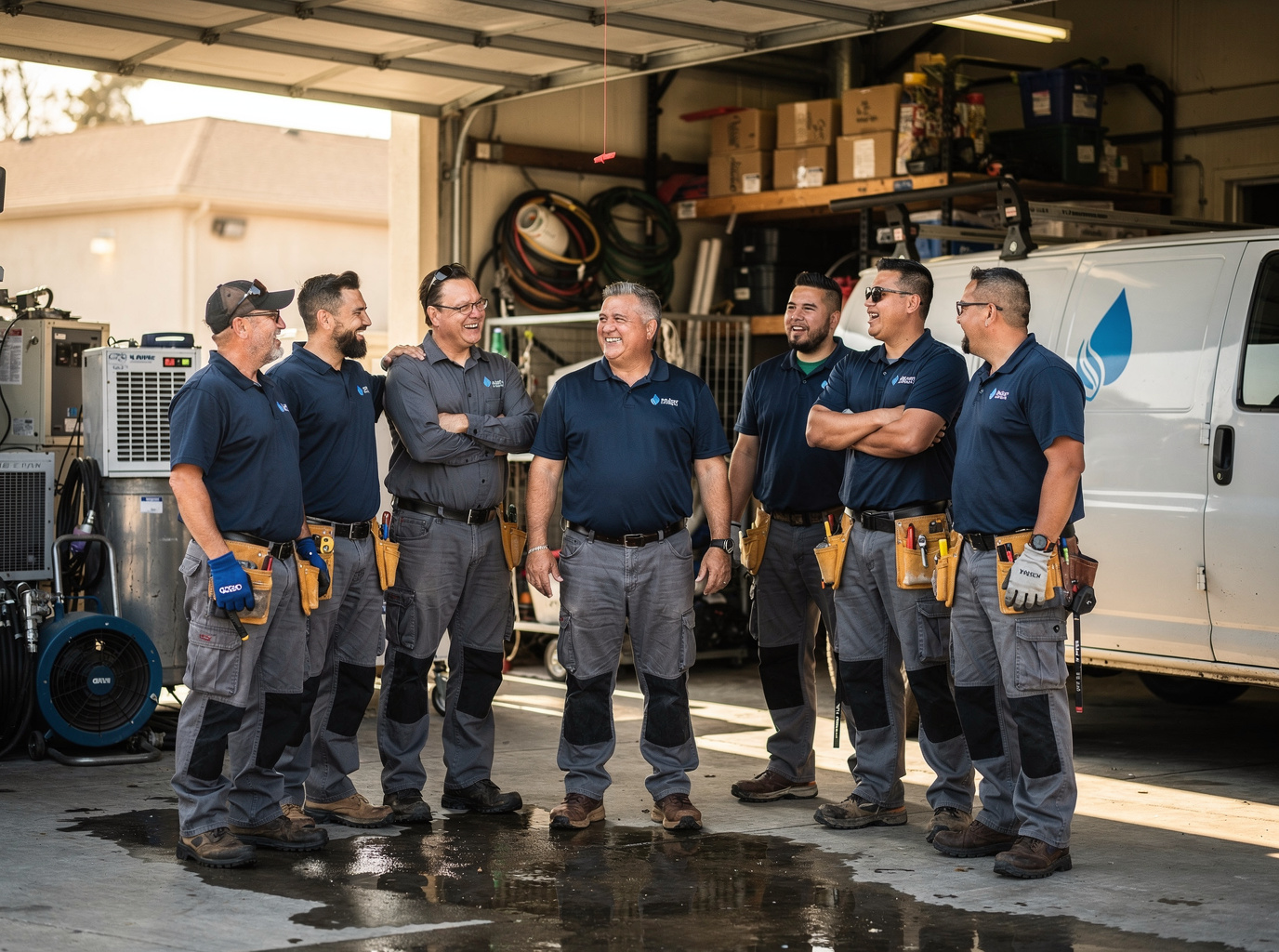
Homes in the 50. Los Angeles section of Chula Vista often sit on older slabs with original plumbing from the mid-century builds common along E J St and nearby side streets. When a supply line bursts or a roof leak hits during a rare heavy rain, moisture travels under the slab and into adjacent walls quickly because of the flat lots and limited side-yard access. Chula Vista Water Damage Restoration pros sends crews from our 70 E J St base to extract water the same day and set drying equipment sized for the tight floor plans typical here.
The mild coastal Mediterranean climate keeps humidity elevated even in winter, so drying times stretch longer than in inland San Diego County spots. We place dehumidifiers and air movers in every affected room and monitor moisture levels daily until readings match unaffected drywall. This approach prevents hidden mold growth that shows up months later in the single-story ranches that line the neighborhood.
Access to many 50. Los Angeles properties requires navigating narrow driveways and shared fences with neighbors in National City and Imperial Beach directions. Our vans carry portable pumps and small extraction units that fit these constraints without blocking streets or requiring heavy equipment.
Around 50. Los Angeles
We regularly work near:
- 📍E J St
- 📍Third Avenue Village
- 📍Chula Vista Nature Center
Water Damage Restoration in 50. Los Angeles — Local Notes
- •Many 50. Los Angeles homes have post-1950s slab foundations where water migrates under the concrete; we use penetrating moisture meters to map the full extent before cutting.
- •Limited side-yard space on corner lots near E J St means we stage drying equipment inside rather than outside to avoid HOA complaints common in the area.
- •Seasonal drainage from higher ground east of the neighborhood funnels water toward lower 50. Los Angeles streets, increasing crawl-space and garage flood calls after storms.
- •Older stucco exteriors absorb water at window and door penetrations; we remove base trim early to allow airflow behind walls during the humidity-heavy drying phase.