2026-11-11 · Carlos Mendoza
Winter Rain Prep for Homes Near Chula Vista Bayfront
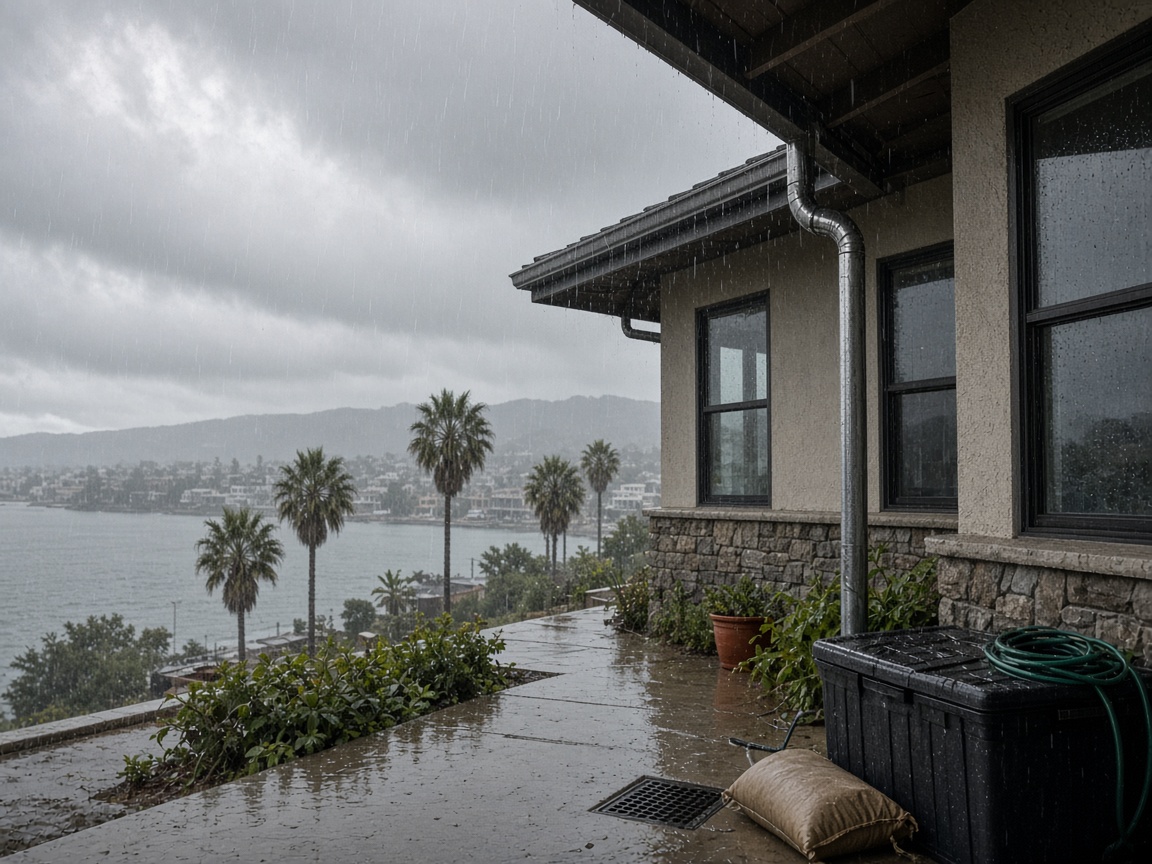
Homes near Chula Vista Bayfront require targeted checks on drainage paths and foundation seals before November rains begin, as the mild coastal Mediterranean climate concentrates most annual precipitation into a few intense periods that can overwhelm flat lots and older infrastructure in Downtown Chula Vista.
Checking Drainage Around Bayfront Properties
Properties along the Chula Vista Bayfront often sit on low-lying ground where runoff from Third Avenue Village slopes toward the water, creating pooling near foundations during heavy events. Walk the perimeter after any early-season rain and clear debris from French drains or channel drains that empty toward Otay Lakes. In neighborhoods like Eastlake and Bonita, clay-heavy soils slow absorption, so adding or regrading swales becomes necessary every 8–12 years to maintain positive flow away from slabs. Test sump pumps if present by pouring water into the basin and confirming discharge reaches at least 10 feet from the house. These steps prevent water from sitting against stucco or siding common in 1960s–1980s builds throughout San Diego County.
Inspecting Roofs and Gutters Before Storms
Tile and composition roofs on Bayfront homes collect leaves from nearby landscaping that clog gutters within the first two storms of the season. Clean gutters and downspouts in October, ensuring extensions carry water at least 5 feet beyond the foundation. Check flashing around chimneys and skylights, as coastal salt air accelerates corrosion on metal edges in structures built before 1990. Homeowners in Otay Ranch and surrounding areas can review What Otay Ranch Residents Should Know After Heavy Rains for additional post-storm indicators. Replace any cracked tiles promptly, since even small gaps allow wind-driven rain to reach underlayment during 30–40 mph gusts typical of winter fronts.
Evaluating Plumbing and Foundation Seals
Pre-1980 houses near the bayfront frequently contain galvanized or cast-iron lines that corrode faster when soil remains saturated for weeks. Review How to Inspect Plumbing in Pre-1980 Chula Vista Houses to identify common failure points before leaks appear inside walls. Apply fresh exterior-grade sealant around hose bibs, dryer vents, and utility penetrations, paying extra attention to south-facing walls exposed to prevailing winter winds. In Bonita and National City homes, raised foundations with crawl spaces benefit from vapor barriers and dehumidifiers set to 50% relative humidity during the rainy months. These measures reduce the chance of hidden moisture reaching framing members.
Preparing for Potential Water Intrusion
When winter systems stall over San Diego County, rainfall totals can reach 2–4 inches in 24 hours, testing every seal on Bayfront properties. Keep a wet/dry vacuum and shop towels ready near lower-level entries, and know the location of the main water shutoff. For any standing water deeper than 1 inch inside the structure, contact professionals offering Water Damage Restoration or Water Damage Repair who serve Imperial Beach and surrounding communities. Document conditions with dated photos before cleanup begins. Regular seasonal prep reduces the frequency of emergency calls during peak storm windows from December through February.